
The Foundation
It is a common misconception that mental health is simply the absence of illness. Instead, it is a dynamic, essential state that dictates how we handle stress, relate to others, and make choices. Your mental health is, therefore, the engine of your entire life. In fact, search data shows that millions of people in the United States search for the term “mental health” every month, a reflection of a growing societal focus on this critical topic.
For too long, conversations around well-being have been polarized: either focusing on managing a mental illness or striving for mental toughness. This guide, however, cuts through that noise to provide a comprehensive look at both sides of the coin. We will define what true emotional and psychological well-being is, then offer actionable strategies for building internal resilience (or mental toughness), and finally provide a clear, stigma-free path toward finding professional support, such as a qualified mental health counselor.”
The State of Mental Health in America Today
The shift in public awareness is necessary, as recent data highlights a widespread and ongoing need for support. According to 2024 statistics, over one in five U.S. adults (approximately 23.4%) experienced a mental illness in the past year, while millions more struggle with increasing levels of anxiety related to current events, the economy, and personal safety.
Crucially, while the demand for support is high, the gap in access to care remains significant. Millions of Americans live in areas designated as Mental Health Professional Shortage Areas. This reality underscores two key takeaways: first, you are not alone in your struggles and second, understanding your options, whether through self-improvement or professional help, is more important than ever.
Defining Mental Health (Beyond Absence of Illness)
Mental health is the overall emotional, psychological, and social well-being that influences your cognition, perception, and behavior. It is about how you feel about yourself, the quality of your relationships, and your ability to manage your emotions and pursue life goals.
While the terms “mental health” and “mental healthiness” are often used interchangeably, the latter refers to the continuous practice of habits that maintain and improve your well-being. A state of good mental health allows you to:
- Realize your own potential.
- Cope with the normal stresses of life.
- Work productively and fruitfully.
- Make meaningful contributions to your community.
The Core Difference: Mental Health vs. Mental Toughness
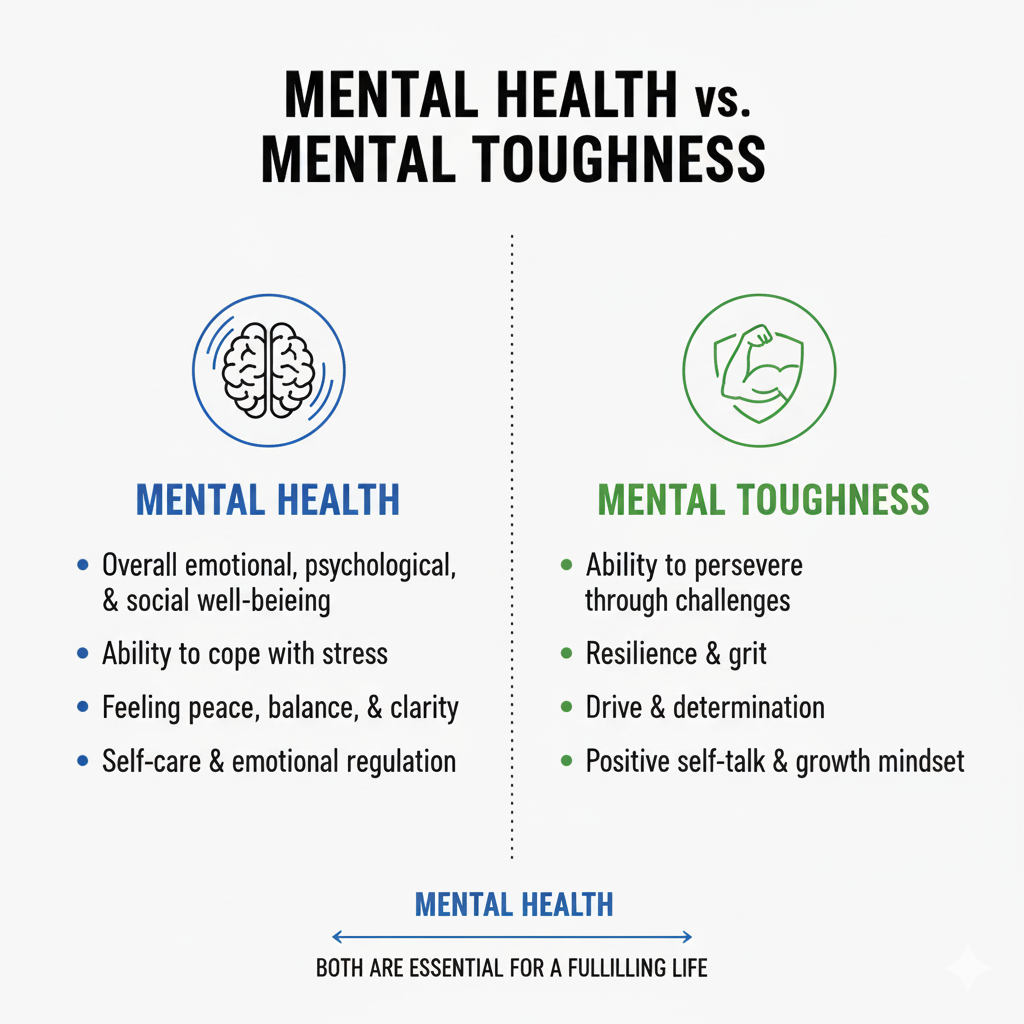
| Feature | Mental Health | Mental Toughness |
| Definition | The overall state of your emotional and psychological well-being. | The psychological edge that enables you to cope with stress, challenge, and failure regardless of the circumstances. |
| Focus | Stability, inner peace, self-care, and clarity. | Resilience, perseverance, drive, and determination. |
| How They Work | Mental health gives you the foundation (the peace and self-awareness) to know when you need to recharge or seek help. | Mental toughness gives you the application (the strength and grit) to push through temporary difficulty. |
A truly strong life is not just about having one or the other; it’s about balancing your care for your mental health with the consistent practice of mental toughness. Without a strong mental health foundation, pure mental toughness can lead to burnout. Without mental toughness, a healthy mind may struggle to overcome life’s inevitable challenges.
Building Mental Toughness and Resilience
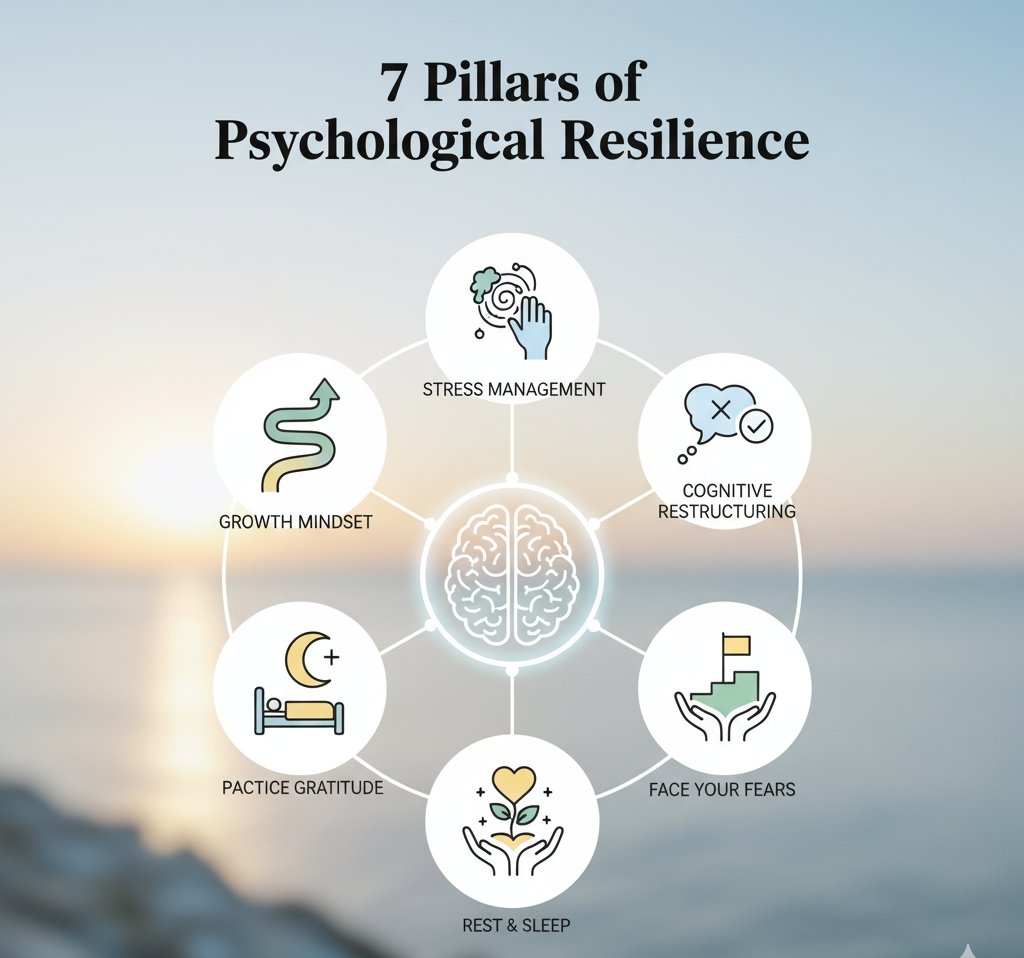
Mental Toughness: 7 Pillars of Psychological Resilience
While excellent mental health provides the emotional foundation, mental toughness is the proactive set of skills that helps you navigate the inevitable chaos and setbacks of a complex life. It is the core ability to perform consistently at the top of your capabilities, regardless of the environment. Far from being a rigid, stoic suppression of emotion, true resilience is a flexible quality that allows you to absorb emotional shock, learn from it, and spring back stronger. It is a trainable skill set—not an inborn trait.
- Here are the seven essential pillars you must develop to build lasting mental toughness and grit.
The Growth Mindset: Overcoming Setbacks
A cornerstone of mental toughness is how you interpret and react to failure. People with a fixed mindset view failure as a permanent limit to their ability, while those with a growth mindset see it as temporary feedback—a necessary step toward mastery. This concept is vital for high achievement and robust mental health.
Learning from Failure Instead of Fearing It
importance of learning from failure instead of fearing it. To operationalize this, practice reframing. When a goal is missed or a challenge is overwhelming, ask these questions instead of defaulting to self-criticism:
- What is the specific, isolated mistake? (Separate the outcome from your entire self-worth.)
- What one key lesson can be extracted from this experience? (Focus on growth, not guilt.)
- What will I do differently the very next time I face a similar situation? (Create an immediate, actionable plan.)
This systematic approach prevents temporary setbacks from eroding your resilience and transforming into crippling self-doubt. By seeing failure as data, you empower yourself to improve.
Stress Management: Practical Tools for Daily Calm
Effective stress management is not about eliminating stress,which is impossible but about consciously regulating your nervous system to prevent chronic stress from becoming toxic. This is crucial for maintaining both physical and mental health.
Talk About Your Feelings (The Social Pillar)
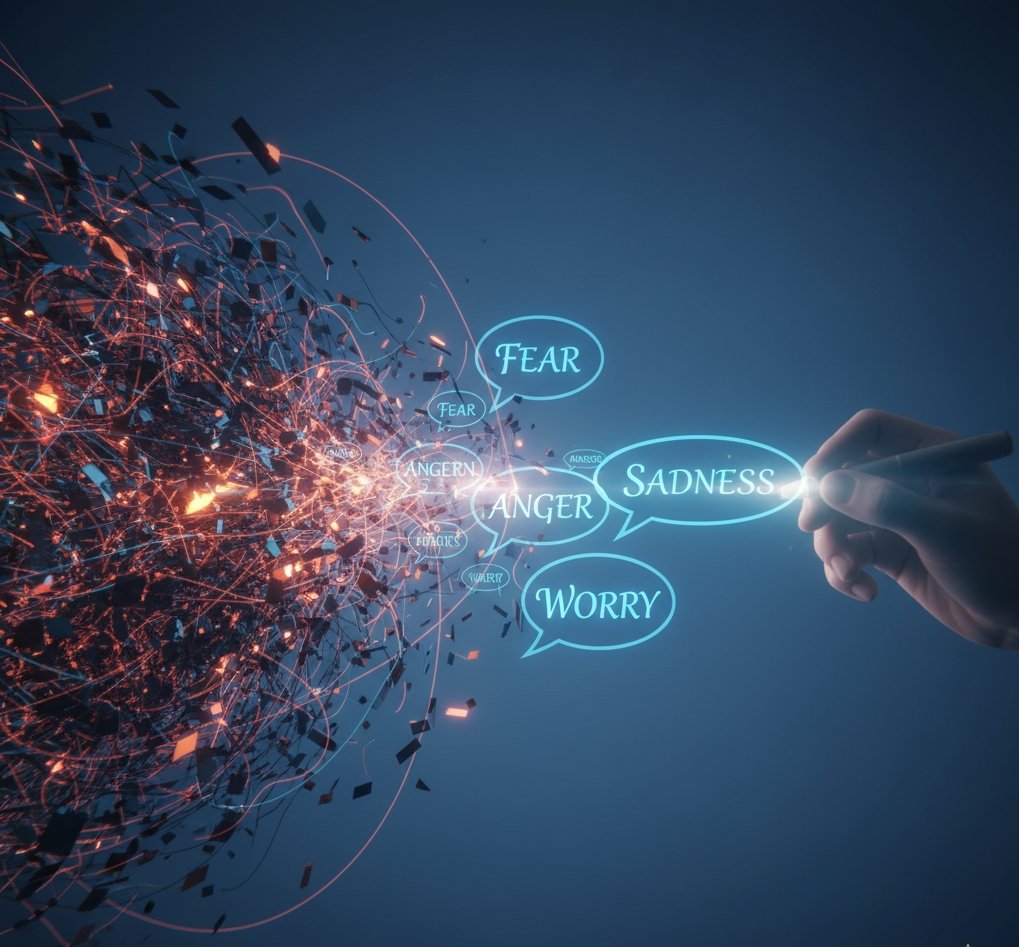
This practice is scientifically proven to reduce the activity in the amygdala, the brain’s fear center. When you put emotions into language, you move them from the instinctive part of the brain to the rational, prefrontal cortex, allowing you to process them logically. This “name it to tame it” strategy is a powerful form of emotional self-regulation and a core component of mental toughness.
Stay Active: A Natural Stress Management Reliever
Physical activity is one of the most effective natural treatments for anxiety and depression. Exercise releases endorphins, which have mood-boosting effects, and provides a healthy, physical outlet for pent-up stress. You don’t need a grueling workout; even a 30-minute brisk walk daily has been proven to significantly boost mental health and resilience.
Eat Balanced Meals to Boost Mood and Energy
The connection between gut health and brain health is undeniable. A diet rich in fruits, vegetables, lean proteins, and healthy fats (like those found in fish and nuts) provides the nutrients necessary for optimal neurotransmitter function. Avoiding excess sugar and highly processed foods helps stabilize blood sugar, which prevents the mood swings and energy crashes that chip away at your mental toughness. Fueling your body is fueling your mind.
Cognitive Restructuring: Training Your Inner Voice
Your inner monologue—your self-talk—is either your greatest asset or your greatest liability. Mental toughness relies heavily on the ability to manage and redirect internal dialogue, often through a technique called Cognitive Restructuring.
Positive Self-Talk: The Daily Practice
If you catch yourself using language like, “I’m always terrible at this,” stop and replace it with a resilient statement: “I struggled this time, but I am learning, and I can improve my process.” This practice builds an internal coach that strengthens your belief in your ability to cope, which is a definitive trait of mental toughness. By consistently training your mind to focus on solutions and progress rather than shortcomings, you actively reinforce resilience.
Facing Your Fears Step by Step
Avoiding what makes you anxious only grants that fear more power. The principle of facing your fears step-by-step involves exposure therapy—gradually confronting low-level fears before tackling larger ones. This systematic approach builds mental toughness by creating a successful track record of conquering anxiety, proving to your brain that the feared outcome is manageable.
The Power of Intentional Breaks and Rest
The relentless pursuit of goals without adequate rest is a fast track to burnout, which severely damages mental health and obliterates resilience. Rest is not a reward; it is a vital biological necessity and a performance enhancer.
Sleep Well: Your Ultimate Mental Health Tool
Sleep is the single most powerful activity for physical and psychological restoration. During deep sleep (REM cycles), the brain processes memories, regulates emotions, and cleans out metabolic waste. Consistent, high-quality sleep is crucial for emotional regulation; without it, you are more prone to anxiety, irritability, and poor decision-making—all signs of compromised mental toughness. Make a non-negotiable commitment to 7-9 hours of sleep per night.
Take Breaks to Recharge: The 5-Minute Reset
Intentional breaks are short, focused pauses designed to disengage from mental strain and prevent decision fatigue. The simplest, most effective break is the 5-minute mental reset: step away from your work, close your eyes, take five deep breaths, and focus only on the sensation of your breathing. This simple action can restore clarity and keep your mental toughness reserves full throughout a demanding day.

Setting Achievable Goals and Tracking Progress
Mental toughness is sustained by a sense of progress. Setting goals that are too large, vague, or distant is a recipe for overwhelm and eventual surrender. The initial instruction from your blog to “set small, achievable goals” is the most fundamental principle of motivation.

The SMART Framework for Resilience-Building
Implement the SMART framework to ensure your goals are resilience-building:
- Specific: What exactly needs to be achieved?
- Measurable: How will you know when it’s done?
- Achievable: Is this realistic for my current resources?
- Relevant: Does this goal align with my core values?
- Time-bound: When is the deadline?
By consistently achieving small, SMART goals, you create a positive feedback loop that solidifies your mental toughness and belief in your own efficacy.
Practice Gratitude Daily for Greater Resilience
This practice is a profound tool for rewiring the brain toward optimism. Gratitude shifts focus from what is lacking or what went wrong to what is present and what went right. This daily acknowledgement of positivity acts as a psychological buffer against negative events, strengthening your core resilience and improving your overall mental health.
Physical Wellness: The Link Between Body and Mind
Finally, mental toughness cannot exist in isolation from your physical state. Your body and mind are a single system.
Hydration and Focus
Even mild dehydration can lead to fatigue, confusion, and impaired cognitive function, making it harder to maintain focus and mental toughness under pressure. Make sure to consume enough water throughout the day.
Exercise for Emotional Regulation
As a form of stress management, regular, vigorous exercise is indispensable. It helps regulate the body’s natural response to stress, making you less reactive to sudden challenges.
By rigorously committing to these seven pillars, you establish a cycle where good mental health empowers you to practice mental toughness, and mental toughness protects and preserves your overall well-being. The next step is knowing when the challenges require the expertise of a professional.
Identifying and Addressing Mental Health Issues

When is it More Than a Dip in Resilience? Recognizing Mental Health Disorders
While mental toughness provides excellent defensive skills for navigating normal life challenges, there are times when underlying chemical, psychological, or situational factors overwhelm these coping mechanisms. This is the point where a temporary struggle shifts into a persistent, clinical concern—a potential mental health disorder.
Recognizing this shift is the first step toward effective treatment. No amount of pure willpower or mental toughness can resolve a clinical imbalance. Seeking professional help is not a failure of character; it is a display of ultimate strength and self-care.
Common Mental Illnesses and How They Present
The search term “list of mental disorders” suggests many people are looking for clarity. This is not diagnostic information, but a guide to recognizing patterns that warrant professional evaluation.
| Disorder Type | Common Signs and Symptoms | Distinction from Normal Sadness/Stress |
| Anxiety Disorders | Excessive worry, nervousness, and fear that is difficult to control. Physical symptoms include restlessness, rapid heart rate, and chronic fatigue. | |
| Major Depressive Disorder | Persistent sadness, loss of interest or pleasure, changes in appetite or sleep, feelings of worthlessness, and difficulty concentrating. | |
| Post-Traumatic Stress Disorder (PTSD) | Intrusive thoughts, flashbacks, avoidance of related reminders, and hyperarousal (being easily startled or constantly on guard) following a traumatic event. | |
| Bipolar Disorder | Marked shifts in mood, energy, and activity levels. This includes periods of extreme “highs” (mania or hypomania) and extreme “lows” (depression). |
If you recognize these symptoms persisting for more than a few weeks, it is time to transition from self-help strategies to professional assessment.
The Critical Role of Seeking Professional Help
When your symptoms cross the threshold into a potential mental illness, the most important action you can take is to connect with a licensed professional. You should understand that,”seeking help is not weakness it’s strength.” This is the core message you must reinforce for readers searching for a mental health counselor or mental health therapist
The terms “counselor,” “therapist,” and even “psychologist” are often used interchangeably, but all refer to licensed professionals who provide evidence-based treatment that addresses the root causes of distress. They offer specialized tools, not just a sympathetic ear.

What to Expect When Talking to a Mental Health Counselor
The highly valuable keyword “mental health counselor” indicates that users are ready to engage with a professional. This section must demystify the process to lower the barrier to entry.
A mental health counselor or therapist is trained to guide you through complex emotional landscapes. Their job is not to give you advice, but to equip you with clinical tools for change.
Therapy Modalities and Approaches
When you start therapy, you may hear terms like the following. These are proven frameworks that a mental health therapist uses to help you build lasting change:
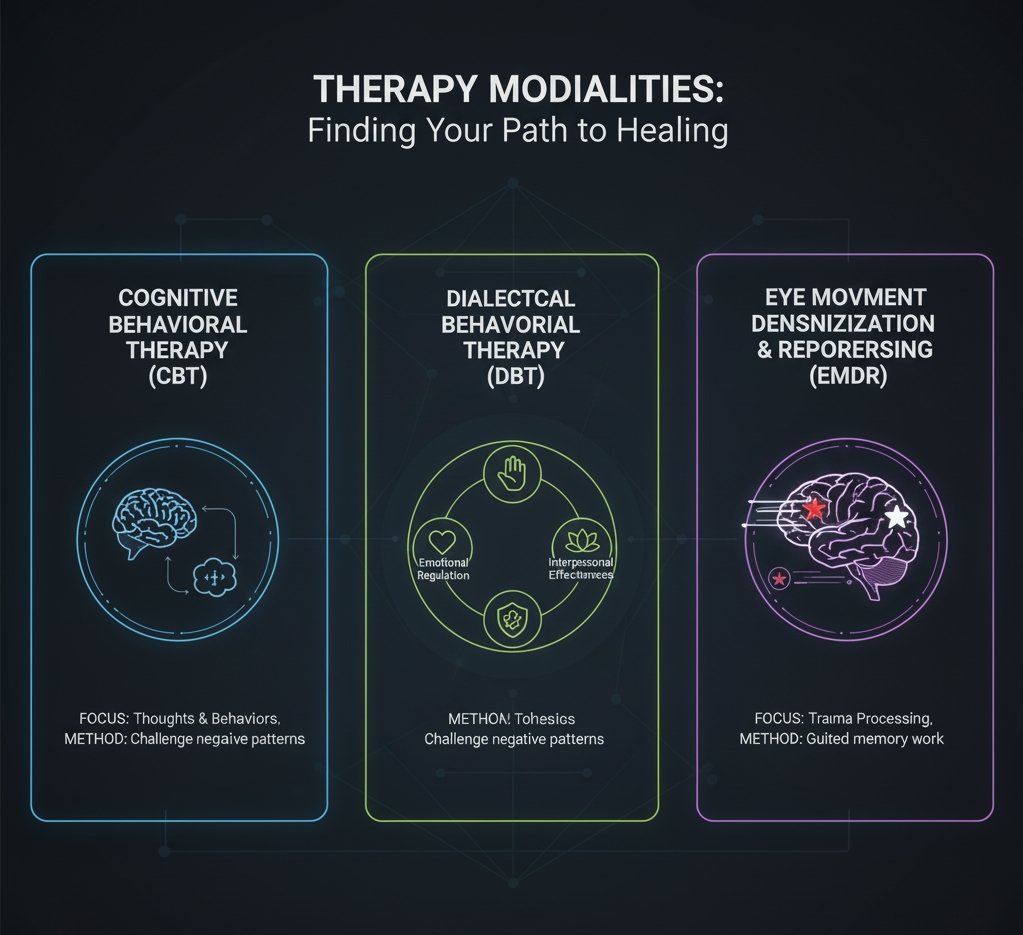
- Cognitive Behavioral Therapy (CBT): Focuses on challenging and changing unhelpful cognitive distortions (thoughts) and behaviors. It’s highly effective for anxiety and depression.
- Dialectical Behavior Therapy (DBT): Focuses on teaching four core skills: mindfulness, emotional regulation, distress tolerance, and interpersonal effectiveness. Often used for mood disorders and emotional instability.
- Eye Movement Desensitization and Reprocessing (EMDR): A specific, structured approach used to help process traumatic memories and reduce their long-term impact.
The Initial Assessment and Goal Setting
Your first few sessions will involve an initial assessment. The mental health counselor will ask detailed questions about your history, symptoms, lifestyle, and goals. This process is essential for tailoring a treatment plan to your unique needs. Unlike a friend, a mental health counselor provides an objective, confidential, and judgment free space based on clinical expertise.
Finding the Right Mental Health Therapist for You
The decision to seek professional care is a major commitment. Finding the right mental health therapist is like finding the right partner.The “fit” is often the most important factor for success.
- Check Credentials and License: Always verify that the mental health counselor is licensed by your state’s board (e.g., Licensed Professional Counselor (LPC), Licensed Clinical Social Worker (LCSW), etc.).
- Evaluate Specialization: If you know you are struggling with a specific issue (e.g., trauma, addiction, or relationship issues), look for a mental health therapist who lists that as a specialization.
- Prioritize Logistics (Insurance and Cost): Contact your insurance provider before starting. This is a critical step that prevents financial stress from becoming another barrier to your mental health care. Be prepared to ask the mental health counselor directly about their out-of-pocket rates, as cost should never prevent you from getting help.
- Trust the Consultation: Most therapists offer a brief initial consultation. Use this time to ask about their approach, their experience, and their general philosophy. The connection you feel—your intuition about the fit—is often the best guide.
Remember, seeking out a mental health counselor is the most powerful act of mental toughness you can perform. It means you are willing to face your most difficult challenges with the support of a trained expert.
Immediate Help and Next steps
Urgent Care: When to Use a Crisis Line Number
There are moments when the stress of a mental illness or overwhelming life circumstances pushes you past the point of relying on self-guided mental toughness. When feelings of hopelessness, despair, or self-harm arise, the need for immediate, confidential support is paramount.
The keyword “crisis line number” and “mental health hotline” are two of the most critical terms in your research. It is vital to know that a crisis hotline is staffed by trained, compassionate professionals who can provide immediate support, resources, and help you create a safety plan. You can call or text these numbers 24/7, even if you are unsure if your situation qualifies as an “emergency.”
Mental Health Hotline: Resources for Immediate Support
If you or someone you know is in immediate danger, please call 911 or your local emergency services.
For confidential support, use the following resources
| Resource | Contact Information (U.S.) | What They Offer | |
| 988 Suicide & Crisis Lifeline | Call or text 988 | 24/7 confidential support for people in suicidal crisis or emotional distress. | |
| Crisis Text Line | Text HOME to 741741 | 24/7 free, confidential crisis counseling via text message. | |
| The Trevor Project (LGBTQ Youth) | Call 1-866-488-7386 or Text START to 678-678 | Crisis intervention and suicide prevention services for lesbian, gay, bisexual, transgender, queer, and questioning (LGBTQ) young people. | |
| Veterans Crisis Line | Dial 988 then Press 1 or Text 838255 | Connects veterans in crisis and their family members with qualified Department of Veterans Affairs responders. |
Mental Health First Aid (What to Do for Others)
Many readers search for “Mental Health First Aid” because they want to know how to support a friend or family member who may be struggling. When someone you care about is showing signs of distress, your role is to offer non-judgmental support and encourage professional help.
Follow the ALGEE action plan for Mental Health First Aid:
- Assess for risk of suicide or harm. Ask directly: “Are you thinking about hurting yourself?”
- Listen non-judgmentally. Let them talk without interrupting or offering unsolicited advice.
- Give reassurance and information. Remind them that help is available and recovery is possible.
- Encourage appropriate professional help (a mental health counselor or therapist).
- Encourage self-help and other support strategies like the mental toughness
The most important thing you can do is avoid minimizing their pain or telling them to “just tough it out.” Validate their feelings, provide the hotline numbers above, and stay with them until they are safe or professional help arrives.
🏁 Conclusion: The Dual Path to a Stronger Life
You have successfully navigated a comprehensive journey through the world of well-being. You have learned that a sustainable, strong life requires a dual commitment: nurturing your Mental Health and building Mental Toughness.
These two forces are not in opposition—they are partners. Mental health gives you the foundation, the peace, and the self-awareness to know when to seek help and when to recover. Mental toughness gives you the application, the perseverance, and the grit to push forward through temporary difficulty.
Whether you choose to implement the daily stress management tools or seek assessment from a qualified mental health counselor , or utilize the crisis line number today, you are taking an active, powerful step in your own life. Your well-being is a constant, evolving process, not a destination.
Call to Action
Don’t let this knowledge remain theoretical. Choose one action item from this guide,whether it’s incorporating a growth mindset into your week, researching local mental health therapists, or simply saving the 988 number to your phone.
- If you found this guide helpful, please share it with one person who may need these resources.
- Do you have a personal story of resilience? Share your experience with mental toughness or seeking a mental health counselor in the comments below.
Frequently Asked Questions (FAQs)❓
Q1: What is the difference between a Mental Health Counselor and a Psychiatrist?
- A: A Mental Health Counselor or therapist typically holds a Master’s degree and provides psychotherapy (talk therapy) to help you address emotional and behavioral patterns (e.g., CBT, DBT).
- A Psychiatrist is a medical doctor (M.D. or D.O.) who can diagnose mental illnesses, provide psychotherapy, and, most critically, prescribe medication. You may see a counselor and a psychiatrist simultaneously.
Q2: How do I know if I need a Crisis Line Number or just some time off?
A: If your struggles (even temporary ones) involve thoughts of self-harm, suicide, or an inability to keep yourself or others safe, that is a crisis, and you should immediately use the Crisis Line Number (988). If you are experiencing high stress, exhaustion, or anxiety that does not involve immediate safety concerns, you likely need professional consultation with a mental health counselor or a period of deliberate rest. When in doubt, call 988—they are trained to assess the severity of your situation.
Q3: Can I build Mental Toughness if I have a Mental Health Disorder?
A: Absolutely. Mental toughness is about developing specific coping skills and resilience. While managing a mental illness is a primary focus, the strategies for mental toughness (like setting small goals, using positive self-talk, and improving sleep) are incredibly valuable skills that help you adhere to treatment and navigate recovery. They work together: therapy treats the disorder, and mental toughness builds your capacity to endure the process.
Q4: Does insurance cover sessions with a Mental Health Therapist?
A: Most U.S. insurance plans are required to cover mental health services at the same level as physical health services, thanks to parity laws. However, coverage varies widely. Always call your insurance provider (the number on the back of your card) to confirm:
- If the specific mental health therapist is in-network.
- Your co-pay, deductible status, and the number of covered sessions.
Pics?
Done
Dome
Approved
Great 👍
Doen